How to Build a Measured Hand-Washing Routine for Your Car with GYEON Wash Soaps
A measured hand-washing routine with GYEON wash soaps transforms car care from a wasteful chore into a precise, sustainable practice that protects your vehicle and the planet. This method involves using exact quantities of GYEON’s pH-balanced shampoos, controlled water application, and deliberate technique to achieve a brilliant finish while minimizing environmental impact. The entire process takes 45 to 60 minutes and requires just two gallons of wash solution when done correctly.
Most car enthusiasts waste three to five times more product and water than necessary, sending excess chemicals into storm drains and inflating their environmental footprint. GYEON’s concentrated formulas change this equation entirely. Their soaps work effectively at dilutions as low as 1:500, meaning a single 500ml bottle can wash 250 cars when measured properly.
This routine bridges the gap between professional detailing standards and zero-waste living. You’ll learn to measure soap precisely, apply it strategically, and rinse efficiently, all while using products formulated to biodegrade safely. The approach fits perfectly into a broader sustainable lifestyle, reducing chemical runoff and conserving resources without compromising the glossy, protected finish your vehicle deserves.
Why a Measured Hand-Washing Routine Matters
A measured hand-washing routine transforms car care from a resource-intensive chore into an intentional practice that aligns with what zero waste means. When you wash your car thoughtfully rather than hastily, you use roughly 40% less water than rushing through the job, and you avoid the temptation to blast every surface with maximum pressure. This deliberate approach matters because the average garden hose dumps five gallons per minute, a quick rinse can waste 50 gallons before you’ve even picked up a mitt.
Beyond conservation, precision protects your vehicle. Controlled soap application using car wash soaps for regular maintenance like GYEON Bathe+ means you’re coating surfaces evenly without oversaturating, which prevents streaking and reduces the time spent rinsing. GYEON’s pH-neutral, biodegradable formulas break down contaminants without stripping protective layers like wax or sealant, so your car stays protected longer between details.
The environmental payoff extends past your driveway. Measured washing reduces chemical runoff that flows into storm drains and eventually waterways. GYEON products biodegrade naturally, but using them sparingly, exact dilution ratios, no excess foam, means even less impact on soil and aquatic systems. This mindful routine fits seamlessly into zero-waste living tips treating car maintenance as part of a larger commitment rather than an exception to your values.
What You’ll Need: Tools and Materials
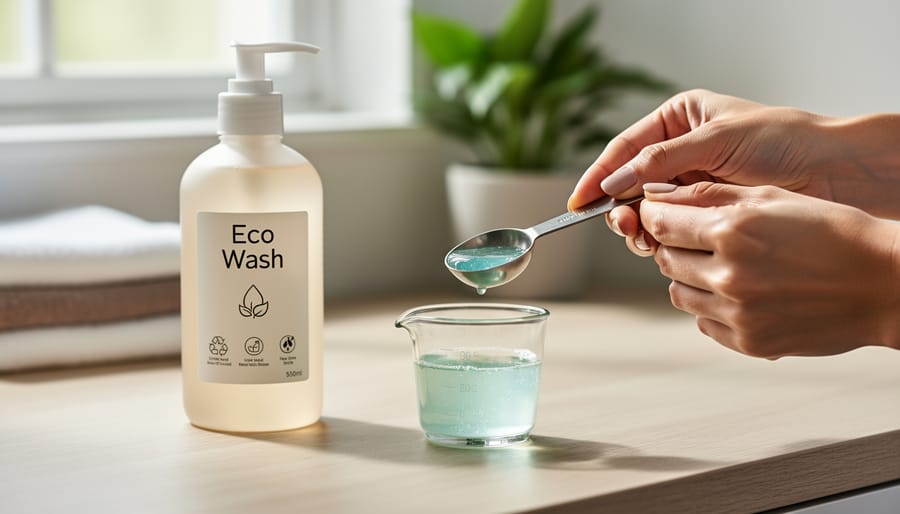
Setting up a minimalist car care station means choosing quality tools that’ll last for years, not disposable items you’ll throw away after a few washes. Here’s everything you need for a measured, eco-friendly hand-wash routine with GYEON products:
- GYEON Bathe+ or Bathe soap: pH-neutral, biodegradable formulas that clean effectively at low concentrations (typically 1:500 dilution ratio)
- Two 5-gallon buckets: One for soapy water, one for rinsing your mitt
- Grit guards: Plastic inserts that trap dirt at the bottom of each bucket, preventing scratches
- Two premium microfiber wash mitts: High-pile mitts hold plenty of suds and glide safely across paint
- Microfiber drying towels (3-4): Plush, absorbent towels that won’t scratch or leave lint
- Wheel cleaning brush: Soft-bristle brush that reaches into wheel barrels without damaging finishes
- Hose with adjustable nozzle: Allows you to control water pressure and flow for efficient rinsing
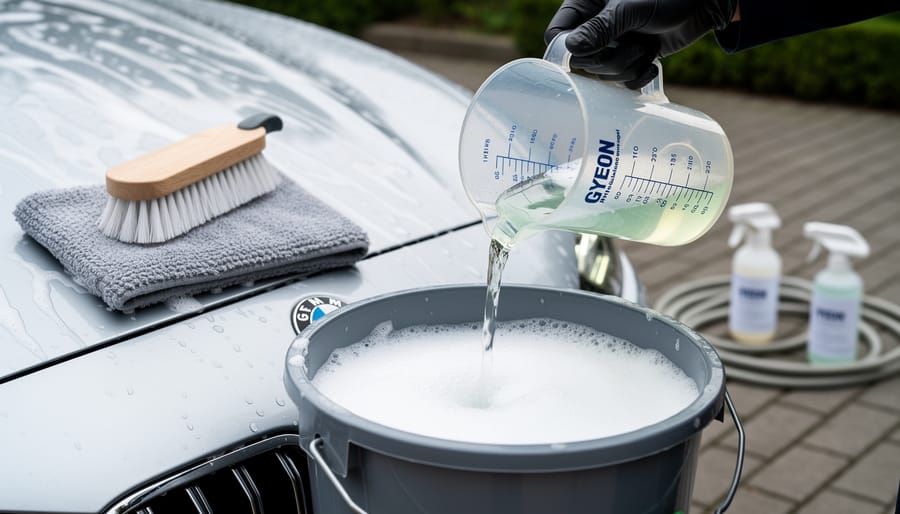
GYEON Bathe+ works beautifully at just 20ml per bucket, meaning one bottle lasts dozens of washes. That’s significantly less product waste than conventional soaps requiring heavy concentrations. Choose microfiber tools with at least 300 GSM (grams per square meter) for durability and performance.
Invest in quality buckets with measurements marked on the side so you can track exactly how much water you’re using per wash. Over time, you’ll refine your technique and likely reduce consumption further. All these tools are reusable for years with proper care: wash your microfiber in fragrance-free detergent without fabric softener, and rinse your buckets thoroughly after each session. This one-time investment supports countless sustainable car washes ahead.
Safety and Environmental Precautions
Before you grab your wash mitt, let’s talk about doing this safely, for your car, yourself, and the environment. A few smart precautions make all the difference between a successful wash and an accidental problem.
Choose Your Wash Location Wisely
Where you wash matters more than you might think. Storm drains lead directly to local waterways without filtering or treatment, carrying soap, road grime, and contaminants straight into streams and rivers. Even with biodegradable products like GYEON soaps, runoff picks up oil residues, brake dust, and heavy metals from your car’s surface.
If you have access to grass or gravel areas, they act as natural filters, allowing soil to break down and absorb contaminants. Some communities offer dedicated car washing pads with proper drainage systems, worth checking your local resources.
Temperature and Timing Considerations
Paint is sensitive to temperature extremes. Washing in direct sunlight or on hot surfaces causes soap to dry too quickly, leaving stubborn spots and potentially damaging clear coat. The surface temperature matters more than air temperature, a black car sitting in mild sun can have scorching panels.
Wait until your car has cooled completely before washing, ideally in shade or during cooler parts of the day. Touch the hood; if it feels warm to your hand, let it cool down. GYEON’s formulas work best on cool surfaces anyway, giving you time to work methodically without rushing.
Handling Products Responsibly
GYEON Bathe+ and Bathe formulas are biodegradable and pH-neutral, designed with environmental impact in mind. Still, handle them sensibly: measure dilution ratios carefully (more soap doesn’t mean better cleaning), and store concentrates away from heat and direct sunlight. If you splash product in your eyes, rinse thoroughly with water.
The Step-by-Step Hand-Washing Process
Step 1: Pre-Rinse and Wheel Cleaning
Start by setting your hose nozzle to a focused spray pattern rather than a wide mist, you’ll remove dirt more effectively while using less water. Beginning at the top of your car, work downward in controlled passes to rinse away loose debris, dust, and grime. Don’t soak the entire vehicle; just remove the surface contaminants that could scratch during washing.
Tackle your wheels and wheel wells next, before they can contaminate your wash water. Wheels collect brake dust, road grime, and metal particles that you don’t want transferring to your paint. Use a dedicated wheel brush and apply GYEON Bathe or Bathe+ directly, these pH-neutral formulas are safe for all wheel finishes, including delicate coatings and bare metals.
Spray each wheel thoroughly, agitate with your brush to lift embedded contaminants, then rinse completely. Work one wheel at a time to prevent the soap from drying. This pre-cleaning step takes an extra five minutes but prevents you from dragging wheel grime across your paint later, which means fewer passes and less water needed during the main wash. Clean wheels first, pristine paint follows.
Step 2: Prepare Your Two-Bucket System
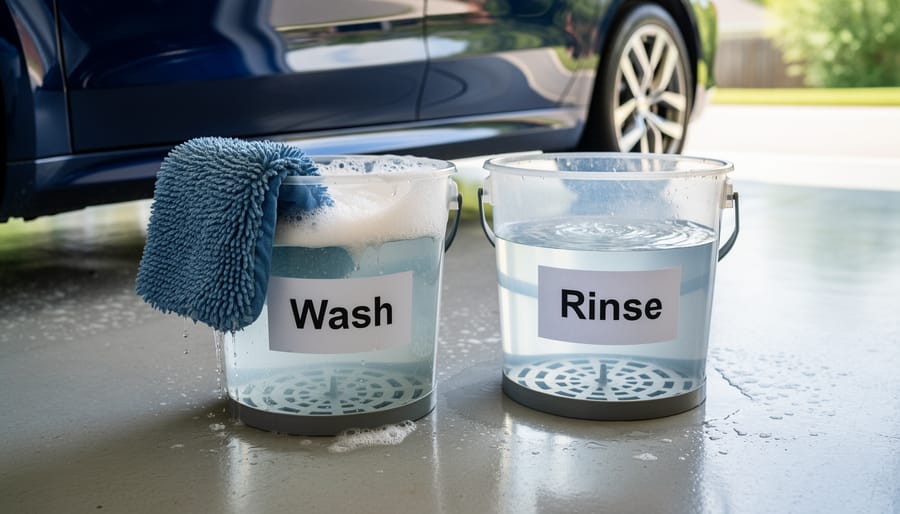
Fill one bucket with about three gallons of clean water, this is your rinse bucket. Drop a grit guard at the bottom to trap dirt particles that fall off your mitt. In your second bucket, add two gallons of water, then measure one to two ounces of GYEON Bathe+ depending on how dirty your car is. One ounce handles light dust; two ounces tackles heavier grime. Pour the soap slowly to create suds without waste.
The two-bucket system works because every time you reload your mitt, you rinse it in the clean bucket first. Dirt settles below the grit guard instead of contaminating your wash solution. This means you’re always applying fresh, clean soap to your paint, not grinding abrasive particles across the surface.
Using measured dilution ratios stretches your product further while maintaining cleaning power. That one-ounce measure can wash an entire vehicle effectively, saving you money and reducing plastic bottle waste over time. Position both buckets within easy reach before you start washing, so you maintain your rhythm without extra steps.
Step 3: Wash from Top to Bottom
Start at the highest point of your vehicle, the roof, and work your way down systematically. This gravity-assisted approach prevents dirty water from running onto already-cleaned sections, making your efforts more efficient and reducing the need for re-washing.
Dip your microfiber mitt into the wash bucket, wring out excess solution (you want it saturated but not dripping), and apply gentle, even pressure as you glide across the surface. Work in straight lines rather than circles. Circular motions can trap grit and create swirl marks, while straight strokes allow contaminants to escape more easily. Each stroke should overlap the previous one by about half its width to ensure complete coverage without gaps.
After every two or three panels, or whenever your mitt picks up visible dirt, rinse it thoroughly in your clean water bucket. Wring it out against the grit guard several times to release trapped particles, then reload with fresh wash solution. This frequent rinsing is the heart of a measured routine: it prevents you from grinding dirt back into your paint.
Move methodically from roof to hood, then to upper doors and trunk. Save the lower panels, rockers, and areas behind the wheels for last, since these accumulate the heaviest contamination. GYEON’s high-lubricity formula means you don’t need to scrub; let the soap do the work. If you encounter stubborn spots, make a second pass rather than applying more pressure.
Step 4: Rinse Thoroughly and Efficiently
After washing each section, rinse immediately before the soap dries. Set your hose nozzle to a steady stream rather than a harsh spray, high pressure wastes water and can drive soap residue into crevices. Start at the roof and work downward, following the same top-to-bottom pattern you used for washing.
The sheet-rinsing technique is your most water-efficient option: remove the nozzle or hold your thumb partially over the hose opening to create a sheeting flow of water. Let this sheet cascade over large panels like the hood and roof. The unbroken flow carries away soap more effectively than spray and leaves a thin, even water layer that’s easier to dry. You’ll use less water and reduce the chance of water spots forming.
Keep the rinse moving. Lingering too long in one area doesn’t improve cleanliness, it just drains your water supply. A complete, efficient rinse typically takes two to three minutes for an average sedan when you maintain steady coverage.
Step 5: Dry with Care
Drying is where many well-intentioned hand washes go wrong. Water spots form when mineral deposits dry on your paint, and improper technique can introduce fine scratches even after a perfect wash. Start with a premium microfiber drying towel, one with long, plush fibers that absorb water rather than push it around.
Begin at the highest point of your vehicle and work downward systematically. Instead of wiping across the paint, gently lay the towel flat and blot sections to lift water. This technique minimizes surface contact and prevents swirl marks. When the towel becomes saturated, wring it out completely or switch to a fresh one rather than dragging a wet towel that can’t absorb anymore.
Pay special attention to crevices around mirrors, door handles, and trim where water pools. Use a dedicated smaller towel or the corner of your main towel to reach these spots. Don’t forget to dry your wheels and wheel wells to prevent water spots on those surfaces too.
For glass and chrome, a separate microfiber cloth works best since these surfaces show streaks more readily. The entire drying process should take five to seven minutes for a sedan, rushing here wastes the care you invested in washing.
How to Verify Your Results and Maintain Your Routine
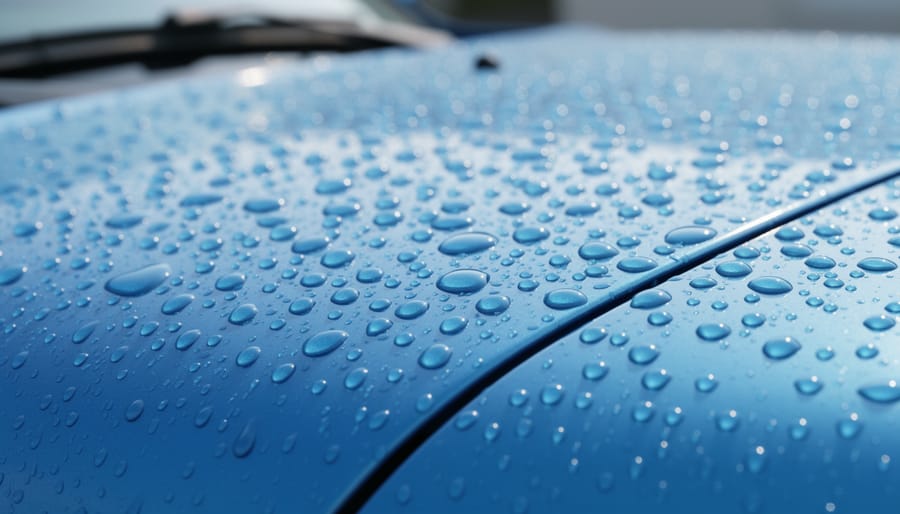
After your final towel pass, walk around the car in good lighting to verify your work. Look for streaks, missed spots, or soap residue, particularly around trim, mirrors, and door handles where product can hide. Run your clean hand across the paint, it should feel glass-smooth, not gritty or tacky. Any roughness means you need another pass with the wash mitt and rinse.
Check for water beading on the surface. When clean, water should form tight, rounded droplets that roll off easily rather than spreading flat. Poor beading suggests either leftover contaminants or that your paint needs protection, not just cleaning.
For environmental responsibility, wash every two to four weeks depending on conditions. Frequent, light washes beat letting heavy grime build up because you’ll use less water and product removing fresh dirt than baked-on contamination. If your car sits under trees or near construction dust, you might wash more often; if it’s garaged and driven lightly, stretch the interval.
Track your routine in a simple notebook or phone app. Note the date, buckets of water used, and soap amount. After a few washes, you’ll spot patterns and opportunities to refine your efficiency. When your microfiber mitts and towels start losing absorbency despite washing, give them a second life for tools like household cleaning before recycling the fabric responsibly.
Frequently Asked Questions About Eco-Friendly Car Washing
Are GYEON wash soaps truly biodegradable?
Yes, GYEON Bathe and Bathe+ formulations are designed to break down naturally without harming aquatic ecosystems. However, you should still wash on permeable surfaces when possible to allow natural filtration before runoff reaches waterways.
How much water does a measured hand-washing routine actually use?
A properly executed two-bucket method with controlled rinsing typically uses 15-25 gallons of water, compared to 80-140 gallons at commercial car washes. You’ll use even less if you employ sheet-rinsing techniques and turn off the hose between sections.
Can I hand-wash my car during drought conditions?
During water restrictions, skip full washes and instead do waterless cleaning with spray detailers on lightly soiled vehicles. Save complete hand-washing for when your car is genuinely dirty and water use is permitted, less frequent washing with proper protection actually extends your paint’s life.
How long does a bottle of GYEON soap last with measured use?
A 500ml bottle of GYEON Bathe+ lasts 15-20 washes when diluted at the recommended 1:400 ratio. Measuring precisely rather than eyeballing extends product life while maintaining cleaning effectiveness, reducing both packaging waste and cost over time.
These questions reflect what most people wonder when they’re starting an eco-friendly car care routine. The biggest misconception is that hand-washing always wastes water, when done with intention, it’s actually the most resource-efficient method available. You’re controlling every gallon, unlike automated systems that run continuously regardless of your car’s actual dirt level.
Another common concern centers on balancing vehicle protection with environmental responsibility. The good news is they’re not opposing forces. Washing less frequently with quality products like GYEON soaps maintains your paint better than frequent washes with harsh chemicals. Your car stays cleaner longer, you use fewer resources, and you’re not stripping protective layers every week. That’s the sweet spot where sustainability and smart car care overlap perfectly.
Building a measured hand-washing routine with GYEON wash soaps is more than just car maintenance. It’s a commitment to caring for your vehicle and the planet simultaneously. Every gallon of water you save, every ounce of biodegradable soap you measure precisely, contributes to a larger movement toward sustainable living.
Your car reflects your values. When you choose products from brands like GYEON that prioritize environmental responsibility without compromising performance, you’re voting with your wallet for a cleaner future. This routine becomes part of your zero-waste lifestyle, sitting alongside composting, reusable shopping bags, and energy conservation.
We’d love to hear how you’ve adapted this routine to fit your schedule and environment. Share your water-saving tips, favorite GYEON products, or photos of your setup with our community. Connect with other eco-conscious car owners who understand that small, measured actions create meaningful change.
Ready to expand your sustainable practices beyond car care? Explore our guides on eco-friendly home cleaning, sustainable fashion choices, and zero-waste living. Together, we’re building a community where looking after what we own means looking after our shared home. Start your next wash with intention, and inspire others to do the same.