What Are Hybrid Renewable Energy Systems (and Why They’re Changing Clean Power)?
A hybrid renewable energy system combines two or more renewable energy sources, such as solar panels and wind turbines, working together to generate more reliable and consistent power than any single source could deliver alone. By integrating multiple technologies with energy storage solutions like batteries, these systems compensate for the natural fluctuations of individual renewable sources, ensuring you have access to clean energy even when the sun isn’t shining or the wind isn’t blowing.
The appeal goes far beyond simple backup power. Hybrid systems represent a practical breakthrough for anyone serious about energy independence and sustainability. They maximize energy production throughout changing seasons and weather conditions, reduce waste by optimizing how different sources complement each other, and often prove more cost-effective over time than installing and maintaining separate systems. For communities working toward climate resilience, these integrated solutions offer the reliability once reserved for fossil fuel infrastructure.
This shift matters now more than ever. As renewable technology becomes increasingly accessible in 2026, understanding renewable energy advantages helps individuals and communities make informed decisions about their energy future. Whether you’re considering options for your home, workplace, or neighborhood initiative, hybrid systems bridge the gap between environmental values and practical energy needs. We’ll walk through exactly how these systems work, the different configurations available, and the specific advantages that make them a powerful choice for sustainable living.
What Hybrid Renewable Energy Systems Really Mean
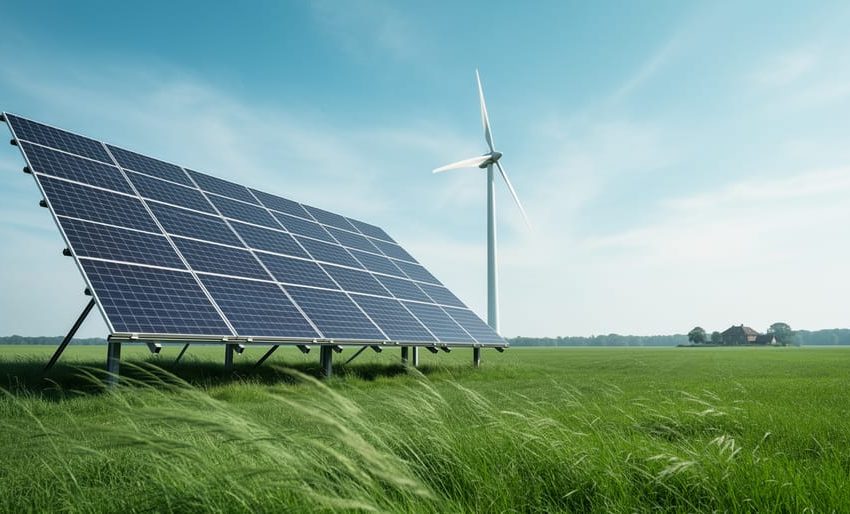
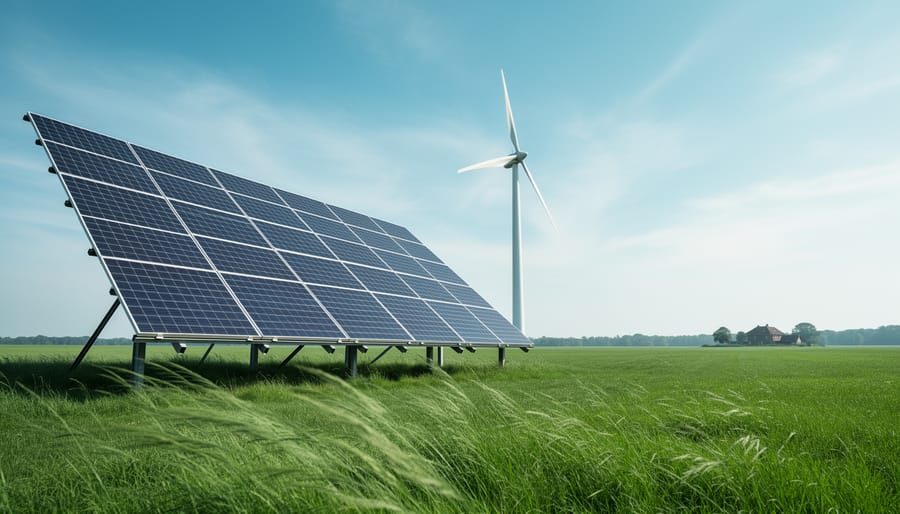
A hybrid renewable energy system is exactly what it sounds like, but probably simpler than you think. At its core, it’s a setup that combines two or more renewable energy sources to generate power together, rather than relying on just one. Think solar panels working alongside a wind turbine, or solar paired with battery storage that captures excess energy for later use. Some systems even connect to the electrical grid as a backup partner, creating a three-way collaboration between solar, storage, and grid power.
Here’s what’s important to understand right away: when we talk about “hybrid” in renewable energy, we’re not mixing clean power with fossil fuels. We’re talking about smart combinations of different renewable technologies that work together like a well-coordinated team. Each source covers for the others’ weak spots, solar generates during sunny days, wind often picks up at night or during storms, and batteries store the surplus for cloudy, calm periods.
- Hybrid renewable energy system
- A power generation setup combining two or more renewable sources (solar, wind, hydro, storage) that operate together to provide more reliable energy than any single source could alone.
- Complementary generation
- When different renewable sources naturally balance each other’s output patterns, like solar peaking during the day while wind often strengthens at night, creating more consistent total power.
- Energy diversification
- Spreading energy production across multiple renewable sources to reduce dependence on any single technology or weather condition, similar to diversifying investments.
- Integrated systems
- Renewable energy setups where different components communicate and coordinate through smart controllers, optimizing when to generate, store, or draw power based on real-time conditions.
To picture this in everyday terms, imagine you’re planning meals for a week. Relying only on your garden (solar) means you eat well when tomatoes ripen but struggle in winter. Adding a community food share (wind) and a freezer for leftovers (battery storage) means you’ve got reliable options year-round. That’s essentially how hybrid renewable systems operate, multiple sources ensuring you’ve always got power when you need it.
How Hybrid Systems Work Together
Think of a hybrid renewable energy system as a relay team where each runner hands off the baton at exactly the right moment. Solar panels take the lead during sunny daylight hours, generating electricity while the sun shines. When evening arrives and solar production drops, wind turbines often pick up the pace, wind speeds frequently increase at night and during seasonal weather patterns. Battery storage acts as the reliable anchor, capturing excess energy from both sources and releasing it precisely when needed.
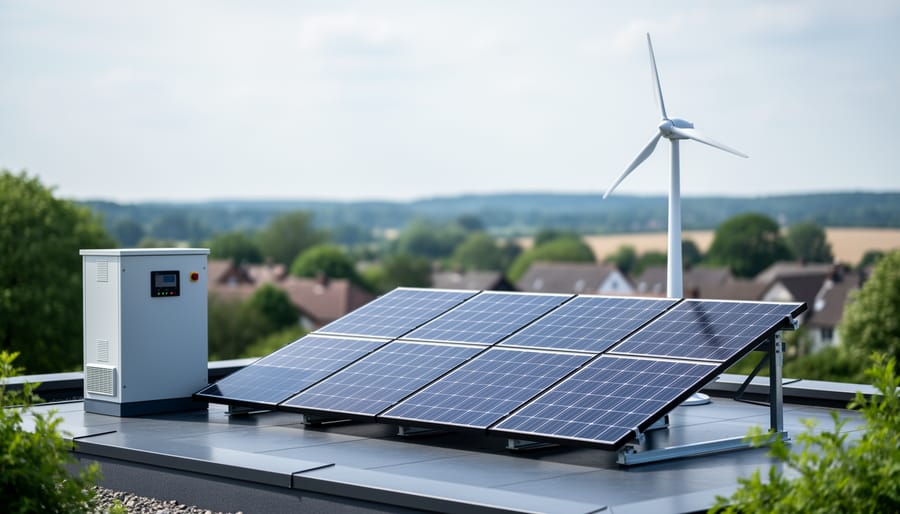
This teamwork happens because of specialized equipment that coordinates the handoffs. At the heart of the system, several key components work in concert:
- Solar panels capture sunlight and convert it to DC electricity during daylight hours
- Wind turbines generate power from moving air, often producing most at night or during storms
- Battery storage banks hold excess energy from any source for later use
- Charge controllers prevent batteries from overcharging and manage power flow from sources
- Inverters convert DC power from panels and batteries into AC electricity your home uses
- Smart management systems monitor all components and direct energy where it’s needed most
The smart controller serves as the team coach, constantly monitoring weather conditions, energy production from each source, battery charge levels, and your home’s current power needs. When solar panels produce more electricity than you’re using on a bright afternoon, the controller directs that surplus into batteries rather than wasting it. If a storm brings strong winds at midnight while your home draws minimal power, the controller stores that wind-generated electricity for morning use.
Modern inverters have become remarkably sophisticated, seamlessly blending power from multiple sources into one steady stream. They can pull simultaneously from solar panels, wind turbines, and batteries, or switch between sources in milliseconds based on availability and efficiency. This intelligent coordination means you get consistent power even though each renewable source naturally ebbs and flows throughout the day and across seasons.
Common Types of Hybrid Renewable Energy Combinations
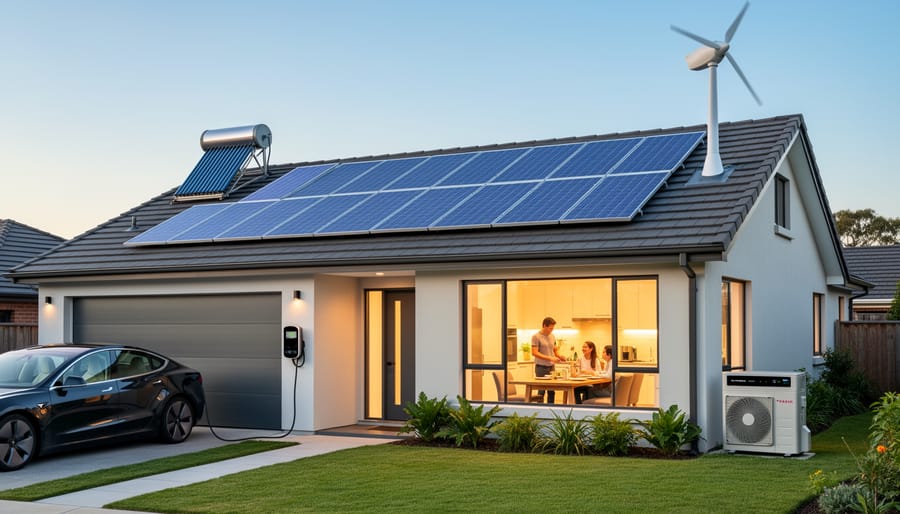
Solar + Wind Hybrids
Solar and wind make natural partners because they tend to peak at opposite times. Solar panels obviously generate most during sunny daylight hours, while wind turbines often hit their stride in the evening and overnight when temperature differences drive air movement. This timing overlap means you’re capturing energy throughout more of the day.
The seasonal complementarity works beautifully too. Winter months that bring shorter, cloudier days often deliver stronger, more consistent winds. Summer’s extended sunshine can compensate for calmer air. Together, these sources smooth out the feast-or-famine pattern that single-source systems face, creating steadier energy production across different weather conditions and times of year, exactly what homes and small businesses need for reliable renewable power.
Solar + Battery Storage
Solar paired with battery storage has become the go-to choice for homeowners embracing renewable energy in 2026. This combination captures sunlight during the day, stores excess energy in batteries, and delivers that power when you need it most, after sunset, on cloudy days, or during grid outages.
What makes this hybrid so practical? You’re no longer completely dependent on generating power the instant you need it. Morning coffee, evening cooking, overnight heating, all can run on solar energy you’ve banked earlier. For eco-conscious households, this means genuine energy independence without sacrificing comfort or reliability.
Battery technology has improved dramatically, with lithium systems offering 10-15 year lifespans and smart management that learns your usage patterns. You decide when to draw from storage, when to pull from the grid (if connected), and even when to feed surplus back during peak hours. It’s renewable energy on your terms.
Multi-Source Systems with Grid Connection
Grid-tied hybrid systems connect your renewable energy setup, solar panels, wind turbine, battery storage, to the utility grid, creating a smart safety net. Your renewable sources power your home first, but when they can’t keep up (cloudy week, calm nights, high winter demand), the grid seamlessly fills the gap. No power interruptions, no oversized battery banks.
What makes this configuration brilliant: excess energy you generate flows back to the grid, often earning you credits through net metering programs. You’re essentially using the utility as unlimited backup storage. When your renewables are producing more than you need, that surplus doesn’t go to waste, it reduces someone else’s fossil fuel consumption while lowering your energy bills.
This setup delivers renewable-first living without the anxiety of going completely off-grid, making it the most practical choice for suburban and urban homes in 2026.
The Core Advantages That Make Hybrid Systems Stand Out
More Consistent, Reliable Energy
The intermittency challenge facing single-source renewable systems largely disappears when you combine complementary energy sources. Solar panels produce peak power during midday hours but go dark after sunset, while wind turbines often generate their strongest output during evening and overnight hours when temperature differentials increase. This natural wind, solar temporal complementarity means your hybrid system keeps generating power through different weather patterns and times of day.
In practical terms, you’re creating a more stable energy flow that mirrors how you actually use electricity throughout the day and night. When cloud cover reduces solar production, wind generation often compensates. During calm, sunny periods, your solar array carries the load. This balanced approach reduces those frustrating gaps where you’d need to draw from batteries or the grid with a single-source system.
The reliability advantage extends beyond daily cycles too. Seasonal variations smooth out, solar typically performs better in summer months while wind often strengthens during winter storms. You’re building resilience into your energy independence, which matters whether you’re powering a home, running an eco-business, or eventually planning to recycle green tech and upgrade components to give each device second life.
Better Use of Your Space and Investment
When you’re investing in renewable energy, getting the most from every square foot matters, especially if you’re working with limited roof space or a small property. Hybrid systems let you harvest energy from multiple sources in the same footprint, dramatically increasing your total power generation without expanding your installation area.
Consider a rooftop setup: solar panels capture sunlight during the day, while a small vertical-axis wind turbine mounted alongside can generate power during cloudy periods and at night. You’re using the same roof space twice as effectively. The same principle applies to ground-mounted systems where wind turbines rise above solar arrays, each claiming different “layers” of your property.
This optimization means you get better returns on your renewable investment. Instead of oversizing a single-source system to meet peak demands, which leaves capacity unused during off-peak times, hybrids keep your equipment productive across varying weather and seasonal conditions. Your dollars work harder because different technologies hit their stride at different moments, creating more consistent value from your upfront investment.
Lower Energy Storage Needs
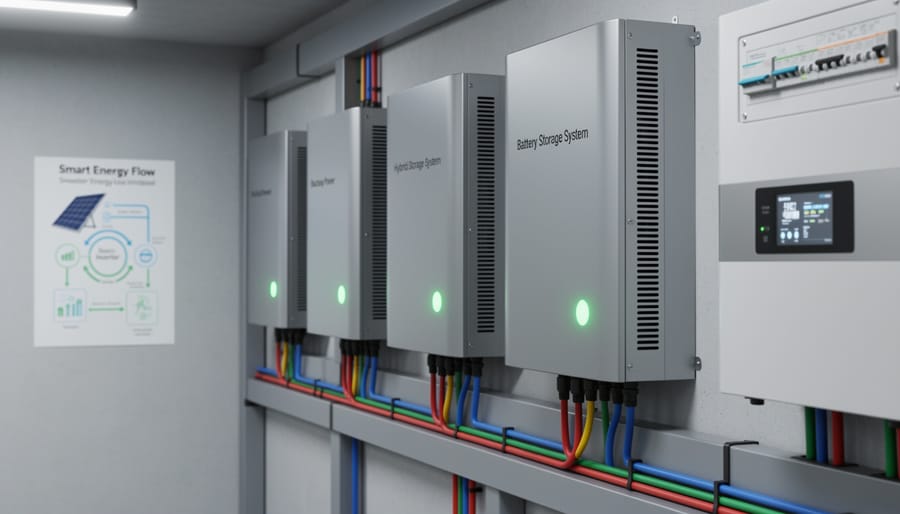
One of the smartest economic advantages of hybrid systems is how they shrink your battery requirements. When you’re generating power from multiple sources throughout different times of day, you don’t need massive battery banks to bridge the gaps.
Think about it: a standalone solar system needs enough battery capacity to cover overnight and cloudy days, that’s expensive storage. But add wind generation that often peaks at night, and suddenly you’re producing power when solar’s offline. Your batteries become backup rather than primary storage.
This matters financially and environmentally. Battery systems represent a significant chunk of renewable installation costs, and they have the largest environmental footprint in terms of mining and manufacturing. Reducing required capacity by 30-50% through smart hybrid design means less upfront investment, lower replacement costs over the system’s lifetime, and genuinely smaller environmental impact from production and eventual disposal.
You’re getting more energy security with fewer batteries, that’s efficient sustainability.
Greater Energy Independence
Hybrid renewable systems give you meaningful control over your own power supply, reducing how much you depend on utility companies or diesel generators. When your solar panels and wind turbine work together with battery storage, you’re generating and storing energy right where you use it. Grid outages that leave neighbors in the dark? Your lights stay on.
This independence matters especially in remote areas where grid connections are unreliable or expensive to maintain. Instead of running noisy, polluting backup generators during outages, your renewable sources keep producing, and your batteries provide the buffer you need.
Even in suburban settings, hybrid systems offer freedom from rate hikes and peak-hour pricing. You’re drawing from your own clean energy first, tapping the grid only when necessary. During emergencies or natural disasters, that self-sufficiency becomes invaluable. You’re not waiting for utility crews to restore power; you’ve built your own resilient energy foundation that works regardless of what’s happening beyond your property line.
Reduced Overall System Cost Over Time
While hybrid renewable energy systems typically cost more upfront than single-source installations, they often prove more economical over their lifespan. Here’s why the math works out.
Because hybrid systems generate power more consistently throughout the day and across seasons, they achieve higher utilization rates, you’re getting more energy from your investment. That solar-wind combination isn’t sitting idle half the time like a solar-only system does at night.
You’ll also spend less on batteries. Since multiple sources keep power flowing, you don’t need massive storage capacity to bridge long generation gaps. Fewer batteries means lower replacement costs down the road, a significant savings since battery banks typically need replacing every 7-12 years.
Many hybrid owners see faster payback periods despite higher initial costs. The systems offset more grid electricity more consistently, accelerating returns. Grid-tied hybrids can even generate surplus power to sell back during peak production periods.
Maintenance costs spread across components that share the workload, reducing wear on individual parts. When planned thoughtfully, hybrid systems deliver superior long-term value for eco-conscious homeowners committed to renewable energy.
Where Hybrid Renewable Systems Are Making a Difference
Hybrid renewable energy systems aren’t just theoretical solutions, they’re powering real homes, businesses, and communities right now. From suburban neighborhoods to remote islands, these smart energy combinations are proving themselves in diverse settings where reliability and sustainability matter most.
Residential Installations
Eco-conscious homeowners are leading the charge. A solar-battery-grid hybrid has become the go-to setup for families wanting energy independence without compromising reliability. These systems typically generate power from rooftop solar during the day, store excess in batteries for evening use, and tap the grid only when needed. Homeowners report significant drops in electricity bills while gaining peace of mind during storms and outages.
Community-Scale Projects
Neighborhoods and small towns are discovering that shared hybrid systems make clean energy more accessible. Community solar-wind projects let multiple households benefit from renewable power without individual installations. One neighborhood initiative in a coastal town combined wind turbines with solar arrays to serve 50 homes, slashing collective energy costs while building stronger community bonds around sustainability.
Agricultural Applications
Farms and ranches have emerged as ideal settings for hybrid systems. Large properties often have space for both solar panels and small wind turbines, while agricultural operations need reliable power for irrigation, refrigeration, and processing. Sustainable farms are installing these systems to power everything from dairy cooling to greenhouse climate control, cutting operating costs while aligning with organic and eco-friendly certifications.
Remote and Off-Grid Locations
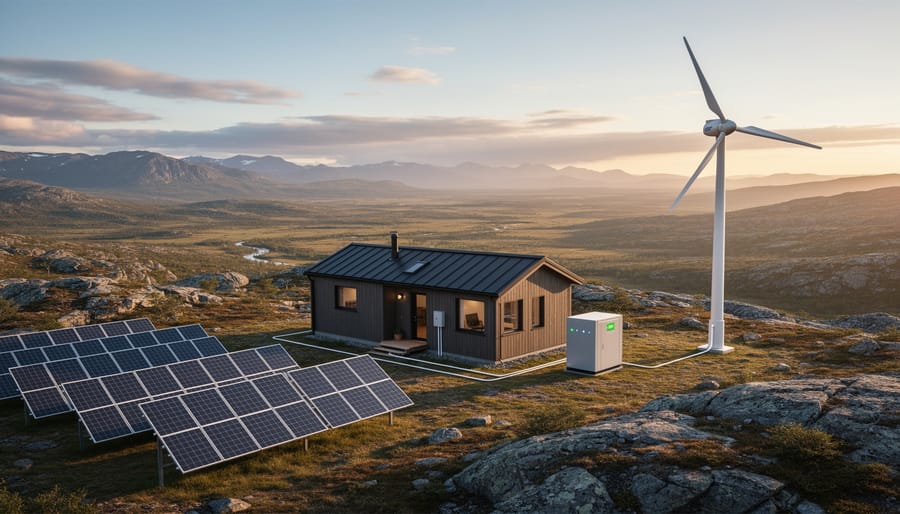
Where grid connection isn’t practical or possible, hybrids shine brightest. Mountain cabins, research stations, and rural properties use solar-wind-battery combinations to achieve complete energy independence. These installations eliminate the need for noisy diesel generators and fuel deliveries.
Hybrid systems are also making environmental impact in:
- Eco-homes designed for net-zero energy consumption
- Sustainable farms reducing fossil fuel dependence
- Island communities achieving energy sovereignty
- Environmental education centers demonstrating renewable technology
- Eco-resorts providing guilt-free getaways with clean power
- Disaster resilience projects ensuring power during emergencies
What connects these applications is practicality meeting purpose. These aren’t experimental test cases, they’re working systems chosen by people who needed reliable, sustainable energy and found that combining renewable sources delivered results that single-source systems couldn’t match.
Common Questions About Hybrid Renewable Energy
Deciding whether a hybrid renewable energy system fits your life brings up practical questions, and getting clear answers helps you move forward with confidence. Here’s what homeowners and eco-conscious communities are asking most often about these combined systems in 2026.
How much more do hybrid systems cost compared to single-source setups?
Hybrid systems typically cost 20-40% more upfront than single-source installations due to additional equipment and integration components. However, they often deliver better long-term value through higher energy production, reduced storage needs, and greater grid independence that can offset the initial investment within 8-12 years.
Are hybrid systems harder to maintain than traditional solar panels?
Maintenance complexity depends on your configuration, but most modern hybrid systems are surprisingly manageable. Solar-battery hybrids need roughly the same attention as standalone solar (occasional cleaning, annual inspections), while solar-wind combinations require checking turbine bearings and blades every 6-12 months, still reasonable for most homeowners or through annual service contracts.
Can I add wind or battery storage to my existing solar installation?
Absolutely, and this is becoming increasingly common as battery costs drop and people seek more energy resilience. Your existing inverter may need upgrading to handle multiple sources, but retrofitting is generally straightforward with the right equipment and an experienced installer who understands hybrid integration.
What’s the environmental impact of manufacturing these additional components?
Manufacturing batteries and wind turbines does require mining and energy-intensive processes, creating an upfront environmental cost. Quality systems recover this carbon debt within 2-4 years of clean operation, and choosing manufacturers with responsible sourcing practices and strong recycling programs reduces the overall footprint considerably.
Beyond these common queries, many people wonder about suitable home sizes and property requirements. Hybrid systems scale beautifully, you don’t need acres of land or a mansion-sized roof. A typical suburban home with decent sun exposure and space for a small wind turbine (even a rooftop model) can benefit from a solar-wind hybrid. Solar-battery combinations work in virtually any home with existing solar potential, including townhouses and smaller properties.
Lifespan is another consideration worth understanding. Solar panels in hybrid setups last 25-30 years, the same as standalone systems. Wind turbines typically run strong for 20-25 years with proper maintenance. Battery storage has the shortest lifespan at 10-15 years for lithium-ion systems, though technology keeps improving and warranties are getting longer. Planning for eventual battery replacement as part of your long-term budget makes sense.
Working with the right installer matters tremendously for hybrid systems. Look for professionals certified in multiple renewable technologies, not just solar specialists. Eco-certified installers who prioritize sustainable practices throughout the installation process, minimizing waste, sourcing responsibly, proper disposal of old equipment, align well with the values driving your renewable energy decision in the first place. Your hybrid system should reflect your commitment to sustainability from planning through operation.
Hybrid renewable energy systems represent more than just the next step in clean power technology. They’re a practical solution that brings energy resilience within reach for homeowners, communities, and businesses ready to make sustainability work in the real world. By thoughtfully combining renewable sources, these systems overcome the limitations that have held back single-source installations, delivering reliable power when you need it most.
If you’re considering renewable energy in 2026, exploring hybrid options gives you flexibility and reliability that weren’t possible just a few years ago. Start by connecting with eco-certified installers who can assess your specific energy patterns, available space, and sustainability goals. The right combination of solar, wind, or storage can transform your relationship with energy while reducing your environmental footprint.
We’d love to hear about your renewable energy journey. Join the Unique Junk community to share your experiences, learn from others who’ve made the switch, and discover partnerships with eco-brands that support sustainable living. Whether you’re just starting to research options or you’re ready to design your system, you’re part of a growing movement.
Every hybrid system installed contributes to a cleaner, more resilient energy future. Together, through smarter energy choices and shared knowledge, we’re building the sustainable world we want to see, one home, one community, one thoughtful decision at a time.