Consumerism vs. Minimalism: Key Differences and Which Fits Your Life
Minimalism wins on sustainability and simplicity, but you don’t have to go all the way there: the best choice for most people is conscious consumerism, a middle path that keeps what you love and stops the rest from piling up. The reason is simple. Consumerism, the habit of buying more as a source of satisfaction, drives overproduction, textile waste, and the resource strain behind it. Minimalism pushes back by asking you to own less and mean more. Neither label has to be a lifestyle you adopt wholesale.
If you’re an eco-minded shopper wondering which approach fits your budget, your closet, and your values, this comparison is for you. Minimalism suits people who feel weighed down by clutter and want clarity. Consumerism, in its mindful form, suits people who enjoy fashion, gifts, and making a home feel personal, and who want to do it with better brands and better habits. We’ll compare the two on environmental impact, daily life, cost, and community, so you can choose with confidence and keep going without guilt.
Consumerism vs. Minimalism at a Glance
Here’s the quick version, so you can see how the three approaches stack up in under a minute. Think of it as a map rather than a verdict on anyone’s shopping habits. Most of us sit somewhere in the middle, and that’s perfectly fine.
| Dimension | Consumerism | Minimalism | Conscious Consumerism |
|---|---|---|---|
| Core mindset | More is better; buying brings happiness | Enough is enough; focus on what matters | Every purchase is a choice with consequences |
| Buying habits | Frequent, trend-driven, often impulsive | Rare, deliberate, highly selective | Researched, values-led, often secondhand |
| Environmental footprint | High: more materials, packaging and waste | Low: fewer items made and discarded | Reduced: better-made, repaired and reused items |
| Budget impact | Steady small spends that add up quickly | Lower overall spending, higher cost per item | Mixed upfront costs, savings through durability |
| Relationship with stuff | Items are easily replaced or forgotten | Items are valued, used and loved | Items are cared for and kept in circulation |
Notice how the last column borrows the best from both sides. It keeps minimalism’s thoughtfulness without asking you to own almost nothing, and it keeps the joy of choosing things you love without the pile-up of impulse buys.
The one-line verdict: conscious consumerism is the bridge, letting you buy with intention, support ethical brands, and enjoy what you own, all while treading a little more lightly on the planet. In the sections ahead, we’ll unpack each approach so you can find the balance that fits your life, your budget and your values.
What Each Approach Really Is
Consumerism: The Buy-More Mindset
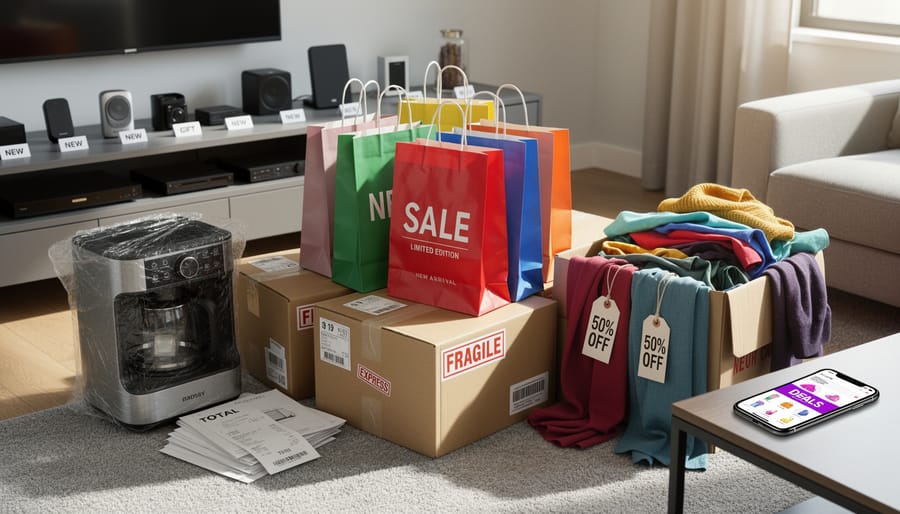
Consumerism is the idea that buying more leads to a better life. Most of us didn’t choose it so much as grow up inside it. Ads, social feeds and shop windows tell us, daily, that the next purchase will finally make us feel put together, happy or ready for whatever comes next.
Marketing is very good at its job. Limited drops, countdown timers and “only three left” banners create a small rush of urgency that has little to do with what we actually need. Add a steady stream of new trends and the things we already own can start to feel out of date long before they wear out.
Fashion shows this most clearly. When a top costs less than a lunch and new collections arrive every few weeks, buying becomes easy, almost automatic. Convenience and low prices make the buy-more habit feel normal, even sensible, in everyday goods from clothes to kitchen gadgets.
There’s also a very human reason it works: a purchase can feel good in the moment. That little lift is real, and it’s nothing to feel guilty about. The trouble is that the feeling fades quickly, and we reach for the next one.
Seeing the pattern with kindness is the first step. Once you notice how the system nudges you, you get to decide how much of it you want to follow.
Minimalism: Living With Intention
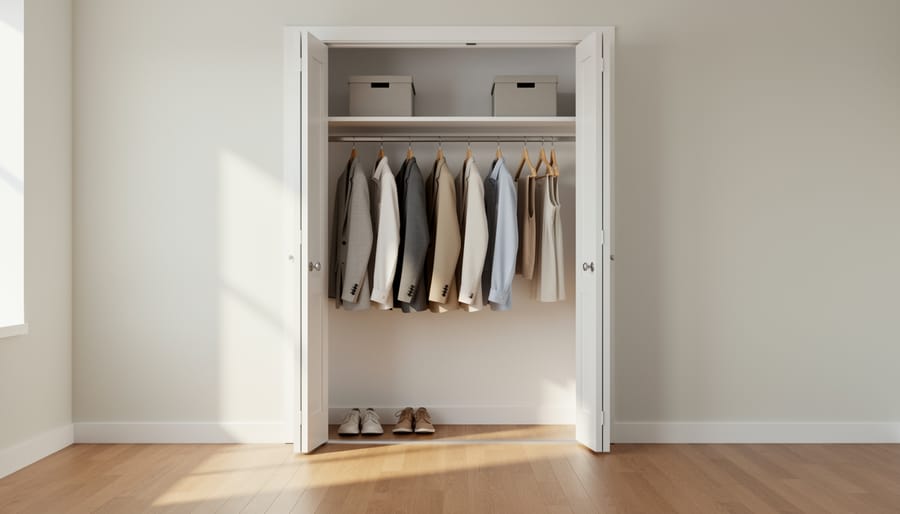
Minimalism, at its heart, is about intention. It’s the practice of choosing what earns a place in your life and letting go of what doesn’t. That might mean a wardrobe of twenty pieces you actually love, or a kitchen with one good pan instead of six mismatched ones. The goal isn’t an empty room. It’s room for what matters to you, whether that’s time with family, a creative hobby, or simply a calmer morning.
Here’s the encouraging part: there’s no single right way to do it. A parent of three will have a very different “enough” than someone living solo in a studio, and both can be minimalists. You don’t need to throw everything out or buy only white and beige. Many people start with one drawer or one shelf and build from there.
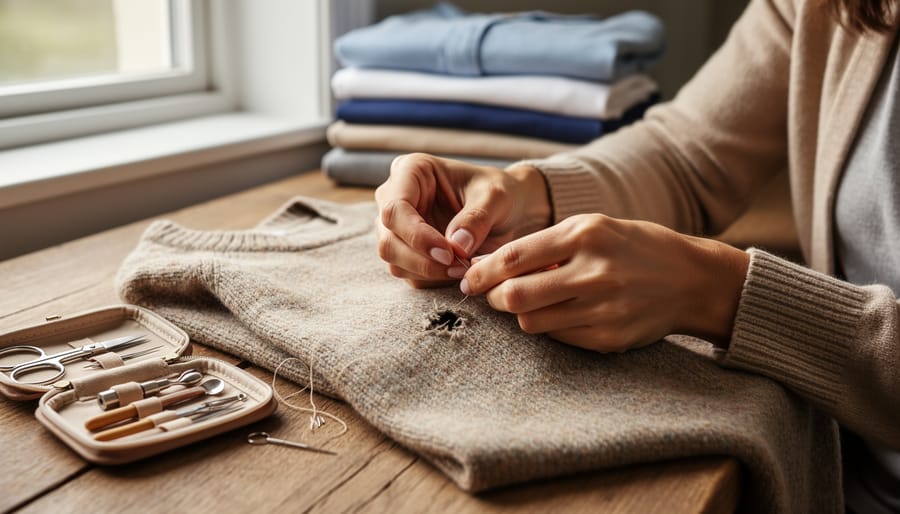
Minimalism also overlaps naturally with zero-waste living. When you buy fewer things, you create less packaging, less clutter, and fewer items headed for landfill. Owning fewer, better-loved things usually means mending a favorite sweater instead of replacing it, or passing along what no longer fits to someone who’ll use it.
Think of it as asking a gentle question before each purchase: will I use this, and will I still love it next year? That small pause can quietly shift habits for good.
Conscious Consumerism: The Middle Path
Conscious consumerism sits right between the two extremes, and it’s the part most of us can start on today. Instead of asking “Do I want this?” it asks three better questions: what am I buying, who made it, and where will it end up? Those questions are where minimalism’s intention and consumerism’s everyday reality finally meet.
In practice, that means you still buy things, you just buy them with care. You might back ethical brands that are open about their materials and labor, or skip new altogether and choose secondhand, repaired, or built-to-last pieces. A well-mended jacket you wear for ten years beats a dozen trend pieces that fade by spring.
Here are a few terms worth keeping in your back pocket:
- Consumerism
- A culture that treats buying more as a path to happiness and status, often driven by marketing and fast-moving trends.
- Minimalism
- A personal approach to owning fewer things so you can focus on what truly matters to you.
- Conscious consumerism
- Buying with awareness of a product’s people, materials, and afterlife, choosing quality and ethics over impulse.
- Planned obsolescence
- Designing items to wear out or go out of style quickly so you’ll replace them sooner.
- Cost per wear
- An item’s price divided by how many times you wear it, a simple way to see real long-term value.
Cost per wear is a handy friend here. A pricier, sturdy piece often wins over time, and secondhand finds win even faster.
Consumerism vs. Minimalism, Dimension by Dimension
Environmental Impact: Resources, Waste, and Carbon
Every purchase carries a hidden backstory. Behind that cotton tee sit water, land, energy, dyes, packaging, and a long journey by ship and truck. A buy-more habit multiplies that backstory many times over, which is why consumerism tends to leave a heavier footprint. The good news is that the footprint shrinks quickly when we shift our habits, even a little.
Think about clothing. Fast trends encourage us to buy often and wear things only a few times. Most of that fabric eventually leaves our closets, and in the United States alone, millions of tons of textiles end up in landfills each year. Packaging follows the same pattern: more orders mean more boxes, mailers, and plastic wrap to sort or toss.
Minimalism flips the equation. When you own fewer things and choose ones built to last, you ask the planet for fewer raw materials, and less ends up as waste. Experts often point out that buying fewer clothes is one of the simplest ways to cut your impact, since the greenest garment is usually the one already hanging in your closet.
Conscious consumerism adds the “better” half of the story. Choosing secondhand, borrowing, and embracing repair and reuse keeps items in circulation and avoids the emissions of making something brand new. Even small steps count. Wear that jacket one more season, mend the hem, and pass along what you no longer need. Each choice quietly lightens your footprint.
Your Wardrobe and Home: What Daily Life Looks Like
Picture two closets. In the first, a fast fashion haul has just landed: a dozen trend pieces, tags still on, bought because the price felt too good to pass up. A few weeks later, half of them sit unworn, and the morning question is still “I have nothing to wear.” That’s the consumerism loop in action. The more we buy, the more we have to sort through, store, and decide between, and decision fatigue sets in before breakfast.
Now picture the second closet. It holds a capsule wardrobe of thirty or so pieces that mix and match, a few mindful secondhand finds, and one jacket that’s been repaired twice. Getting dressed takes two minutes. There’s no guilt pile, no overflowing drawer, and no panic-buying before an event.
Your home follows the same pattern. A buy-more mindset fills shelves and storage bins with things that rarely get used, while an intentional approach leaves breathing room and makes it easier to find what you actually love.
Conscious consumerism sits comfortably in the middle. You don’t have to empty your closet or stick to a rigid number of items. You simply ask whether a piece fits your life and whether it was made with care. Exploring sustainable fashion is a great way to see how brands are rethinking materials and waste, so your next purchase can be one you keep for years.
The good news? You can start with a single drawer. Shop your own closet first, and notice how much lighter everyday choices feel.
Money, Time, and Wellbeing
Money looks different depending on whether you count the price tag or the whole life of the item. A consumerist habit leans on frequent, low-cost purchases: a $15 top here, a $9 gadget there. Each feels harmless, yet they add up fast, and many of those items wear out or fall out of style within a season. Minimalism and conscious consumerism flip the math. You buy fewer things, so you can afford a better one, and cost per wear or cost per use drops the longer it lasts.
Let’s be honest, though: sustainable options can cost more upfront, and that isn’t realistic for every budget. The good news is you don’t have to buy new to shop mindfully. Clothing swaps, thrift stores, and community sharing groups put quality pieces in your hands for little or nothing. Learning to sew on a button or patch a seam is a small skill that stretches a favorite item for years. Even small steps help you save money over time, whether that’s from fewer impulse buys or lower energy bills at home.
Then there’s time. Constant shopping, returning, sorting, and storing eats hours that most of us would rather spend elsewhere. Owning less means less to clean, fold, and keep track of, and getting dressed gets quicker too.
Wellbeing follows. Many people find that fewer choices means less decision fatigue and less guilt over unworn items. The quick lift of a new purchase fades, while satisfaction from things you truly love tends to last. That steadier, calmer feeling is one of the quiet rewards of buying with care.
Community and Collective Change

Consumerism and minimalism don’t just shape our closets. They shape the places we live in, too.
Traditional consumerism tends to be a solo activity. We scroll, click, and wait for a box to arrive, and the whole transaction can happen without a single conversation. It keeps shelves stocked and plenty of people employed, but it can also leave local shops struggling and neighbors feeling a bit disconnected.
Minimalism, on its own, can sometimes stay private too. Decluttering a closet is a personal win, yet if those clothes simply head to a donation bin, the community benefit stops there.
Conscious consumerism is where the two ideas start to connect. When you choose ethical brands, buy from local makers, or support small businesses that pay fair wages, your money becomes a quiet vote for the kind of neighborhood you want.
Then there’s the fun part: sharing. Clothing swaps turn a pile of unworn pieces into a free new wardrobe for everyone in the room. Repair cafes teach us to mend a zipper or darn a sweater instead of tossing it. Tool libraries, buy-nothing groups, and neighborhood sharing shelves let one item serve many households.
One person buying less barely moves the needle. A street, a school, or a friend group doing it together? That’s when habits spread, skills get passed along, and real change starts to snowball.
Which Approach Should You Choose?
Who Fits Where: A Quick Self-Check
Not sure where you land? Here’s a quick self-check. There’s no wrong answer, and plenty of people shift between these as life changes.
- Choose minimalism if clutter drains you, your space is small, or you feel calmer when you own fewer things.
- Choose conscious consumerism if you still love fashion and home goods, but want to know who made them and where they’ll end up.
- Choose a blended approach if you have a busy household, a tight budget, or kids who outgrow clothes every season.
If you’re raising a family, minimalism may look less like a sparse closet and more like swapping hand-me-downs and borrowing what you only need once. On a tight budget, thrifting and repairing are some of the most affordable, planet-friendly moves you can make. They often cost far less than buying new “eco” products. If you have room to spend a little more, investing in a few well-made pieces from ethical brands can pay off over the years.
Maybe you don’t relate to any of these profiles. That’s fine too. A few simple buying rules can carry you a long way: wait a week before a non-essential purchase, check your own closet first, and ask whether you’ll still love it next year. Small habits like these add up, especially when we share them with friends and neighbors.
Simple Steps to Start Today
Starting doesn’t need a big overhaul or a dramatic closet purge. A few small habits, repeated, do most of the work.
Pause before you buy. Give yourself 48 hours before any non-essential purchase. If you still want it after the wait, and you can picture how you’ll use it at least 30 times, it’s probably a keeper. Most impulse urges fade on their own.
Shop your own closet first. Before browsing anything new, try restyling what you already own. Swap accessories, layer differently, or pull out a piece you forgot about. You’ll often find the “gap” you felt was really a lack of fresh ideas.
Choose secondhand or repair. Look to thrift shops, clothing swaps, and online resale before buying new. Learn a few basic fixes like sewing on a button or patching a seam, or visit a local repair cafe. The same thinking applies beyond clothes: a cracked gadget or old appliance can often get a second life instead of heading to landfill.
Support brands that share your values. When you do need something new, look for makers who are open about materials, fair labor, and end-of-life plans. Small, eco-minded brands are often glad to answer questions, so ask.
Pick just one of these steps this week. Small, steady choices add up, especially when we make them together.
Common Questions About Minimalism and Conscious Consumerism
Let’s tackle the questions people ask us most. Short answers, no guilt attached.
Do I have to get rid of everything to be a minimalist?
Not at all. Minimalism is about keeping what you use and love, and that number looks different for every person, budget, and family size. Start with one drawer or shelf and go from there.
Can I be a minimalist and still love fashion?
Absolutely. Plenty of people build wardrobes around fewer, better pieces they genuinely adore, and mixing in secondhand finds keeps style fresh without constant buying.
Is conscious consumerism just greenwashing in disguise?
It can be if you take every green label at face value. Ask who made the item, what it’s made from, and how long it will last, and lean on clear details over vague buzzwords like “eco-friendly.”
What do I do with items I no longer need?
Pass them along before you consider the bin. Donate, swap with friends, resell, or repair and repurpose what you can, so each piece gets another life.
One thread runs through all of these answers: you don’t need perfection. Whether you lean toward minimalism, conscious consumerism, or a blend of both, the goal is simply to buy and keep things with a little more thought. Choosing secondhand, mending a favorite jacket, or hosting a clothing swap with neighbors all count, and they get easier when we do them together.
So here’s the real takeaway: you don’t have to pick a side. Consumerism and minimalism sit at opposite ends of a spectrum, and most of us live somewhere in the middle. The best choice is simply the one that helps you live with intention and care for the planet, whether that means a tidy capsule wardrobe, a thrifted find you’ll love for years, or just pausing before your next purchase.
What matters most is that small steps add up. One repaired jacket, one clothing swap with a neighbor, one thoughtful “do I really need this?” moment. Multiply that across a whole community and the impact grows fast. You don’t need to be perfect to make a difference, you just need to begin.
We’d love for you to join the Unique Junk community as we build a greener, more sustainable world together. Explore our eco-friendly brands and zero-waste tips, and take your next small step today.